

Skip to main content
Pipeline crew in action

Overview:

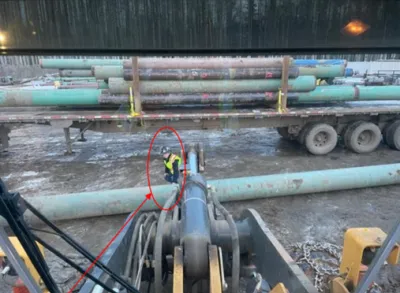
A pipeline crew was in the process of loading flume pipe, a heavy-duty version of culvert piping. The crew used a wheeled loader to pick the pipe from the ground level and place it on a high-boy trailer.

The crew had successfully loaded multiple joints of flume pipe. While loading the last joint, the operator struggled to pick it up with the open-forked loader (no grapple forks). A supervisor attempted to aid the loader operator and, in doing so, placed himself in the line of fire.

The loader operator tried picking the pipe joint up, which was 48 ft in length and weighed approximately 5,000 lbs. The pipe rolled forward onto the supervisor’s leg and ankle, causing a significant lower leg injury. The supervisor was treated on-site and taken to the hospital, where he underwent surgery.
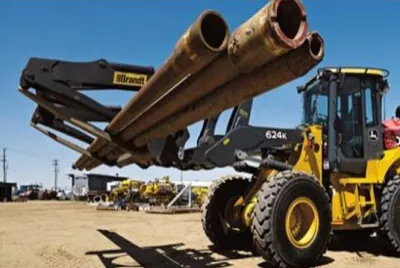
Example of one acceptable style of grapple fork
Contributing Factors:
  • The injured worker put himself in the Line of Fire with a significant energy source (loader and 5,000 lbs flume pipe).
  • Other workers did not intervene to correct the at-risk behavior – If you see it, own it!
Required Actions:
  • Be aware of Line of Fire risks in pre-job planning, paying close attention to high-energy sources.
  • When moving tubulars, speak with your leader about the use of grapple forks.
  • Ensure a control zone is in place, where applicable, with people out of the Line of Fire so that if something goes wrong, we fail safely.
Change Directive:
  • Contractors will not be permitted to move pipe using open-top carriage (pallet) forks.
  • When moving pipe, all contractors must have a means of maintaining control of the pipe. While there are many acceptable methods of moving pipe, if forks are used, a hydraulic-style grapple fork is required.

Learning Before Serious Harm

Our 2019–2024 PSI Report analyzes industry-submitted incidents to highlight patterns and risks with the highest potential for serious outcomes—supporting learning before harm occurs.

Learn from Past Events

Explore Safety Alerts to see how incidents occurred and what can be done differently. Applying lessons from past events helps workers and leaders recognize hazards before they lead to serious harm.

Related Learning Opportunities

Share: