

Skip to main content
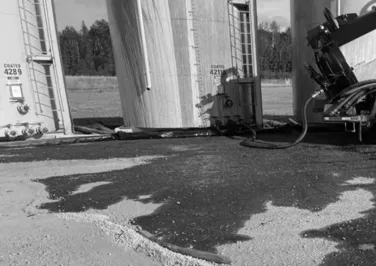
View of Spill at Slop Tank

Incident Description:

  • During a facility turnaround, a third-party service provider was offloading various process fluids into temporary 400-barrel tanks (slop tanks).
  • The tanks were equipped with gauge boards and were properly bonded and grounded.
  • During these operations, a loss of primary containment occurred, resulting in a release of approximately 2.5 m³ of product.
What Was Supposed to Happen?
  • During the turnaround, a third-party service provider was tasked with offloading various process fluids into temporary 400-barrel tanks (slop tanks).
  • The temporary tanks were staged within the facility and equipped with gauge boards and were properly bonded and grounded.
History Leading Up to the Event:
  • A turnaround site plot plan risk assessment was completed, and a review of learnings from previous events, including considerations for tank placement and the use of a containment liner.
  • Temporary 400-barrel tanks were staged onsite prior to turnaround activities.
  • Turnaround commenced, and loading/offloading operations from temporary tanks began.
What Happened?
  • A third-party combo unit operator and assistant began offloading mixed oilfield waste into a 400-barrel tank.
  • The operator did not connect the vent line or grounding cable and parked within 7.5 m of an adjacent “Hot Oil” tank.
  • As the tank approached capacity, 57 m³ (60 m³ capacity), the truck operator began to hear air rushing through the transfer hose.
  • The operator stopped the transfer pump; however, fluid was released from the temporary tank vent line and relief hatch.
  • An abrupt loss of primary containment (LOPC) occurred at the temporary slop tank, releasing approximately 2.5 m³ of product.
  • Personal gas monitors alarmed on high LEL
  • Combo truck engine began to “runaway” (Engine runaway = flammable gases or vapors mixed with air are drawn into the engine; increased fuel source causes engine speed to increase with the potential for explosion).
  • The truck operator activated the positive air shut off, to shut down the engine.
What Could Have Happened?
  • Multiple fatalities or life-altering injuries due to fire or explosion
  • Significant equipment damage
  • Regulatory investigation, delays, and potential enforcement actions
Learnings / Causes:

Worker Inexperience and Training:

  • The combo unit operator had experience operating vac trucks but not previously performed this type of fluid transfer and was not trained on the task.
  • Company procedures for fluid transfer were not reviewed.

Pumping Pressure:

  • Normal off-loading pump pressure is 5 psi. At the time of the overflow, the pump was operating at 10 psi, increasing the transfer pressure and rate.

Air Ingress:

  • Air was pushed from the combo unit tank to the slop tank.
  • The 45° angle of the combo unit, combined with the location of the high-point take-off valve above the fluid level, caused the pump to lose fluid suction.
Corrective Actions:
  • Ensure service providers train workers on fluid transfer to tankage, including safe operating pressures.
  • Develop organizational guidance for temporary tank use, including:
    • Bonding and grounding requirements
    • Use of environmental liners
    • Vent line use and workplace labeling
    • Fill limits
    • Tank placement and staging
    • Prevention of air ingress
  • Conduct targeted inspections of fluid transfer operations.
  • Conduct expectation review meetings with service providers.
  • Implement the Green Hand Program for new and young workers.

Learning Before Serious Harm

Our 2019–2024 PSI Report analyzes industry-submitted incidents to highlight patterns and risks with the highest potential for serious outcomes—supporting learning before harm occurs.

Learn from Past Events

Explore Safety Alerts to see how incidents occurred and what can be done differently. Applying lessons from past events helps workers and leaders recognize hazards before they lead to serious harm.

Related Learning Opportunities

Share: