

Skip to main content
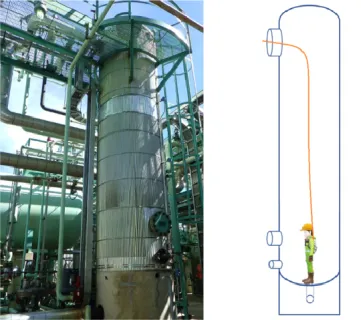
Vessel and approximate diagram showing how worker would  have accessed and been positioned within the vessel

Incident Description:

  • A worker entered a butane treater via rope access to perform NDE (Non-Destructive Examination) inspection as required during a plant turnaround.
  • After a few minutes inside the vessel, the worker was alerted by their personal monitor of an atmospheric hazard. The worker exited the vessel with the assistance of a rope access technician using the same rope system they accessed with.
  • A subsequent download from the worker’s personal monitor showed they were potentially exposed to 22 ppm of carbon monoxide (CO) for approximately 3-5 minutes.
  • The 8-hour OEL (Occupational Exposure Limit) for carbon monoxide is 25 ppm.
Contributing Factors:
  • Insufficient air movement may have contributed to the accumulation of CO within the vessel. The vessel was open to atmosphere; however, there was no active ventilation in place prior to or during entry.
  • Work activities in the vessel earlier in the day, or off-gassing from previous contents, could have produced the detected CO.
  • Pre-entry atmospheric testing did not show any signs of CO. The test did not show any CO because it was not conducted properly. The pre-entry atmospheric test was performed at the manway near the top of the vessel, and a probe or extension tube was not used to sample further down into the vessel.
    • The person conducting the pre-entry and continuous atmospheric testing did not understand the capabilities and limitations of the equipment they were using. They did not understand that a probe or extension tube would be required to obtain a sample from various levels within the vessel.
    • The Area Authority did not physically witness or confirm that the pre-entry test was conducted properly, as required by the CSE Code of Practice. Confirmation of a satisfactory pre-entry atmospheric test was verbal.
Required Actions:
  • Share this safety alert and review with your team the requirements for planning, authorizing and executing work within a confined space.
  • Ensure that when authorizing work and reviewing pre-entry requirements, assessments are being conducted properly and safeguards implemented are having the desired results.
    • Questioning Attitude: Ask questions of those involved in the work to ensure they know what they are accountable for, understand the capabilities and limitations of their equipment, and are competent to undertake their assigned duties.

Learning Before Serious Harm

Our 2019–2024 PSI Report analyzes industry-submitted incidents to highlight patterns and risks with the highest potential for serious outcomes—supporting learning before harm occurs.

Learn from Past Events

Explore Safety Alerts to see how incidents occurred and what can be done differently. Applying lessons from past events helps workers and leaders recognize hazards before they lead to serious harm.

Related Learning Opportunities

Share: