

Skip to main content
Flanged connection

Background:

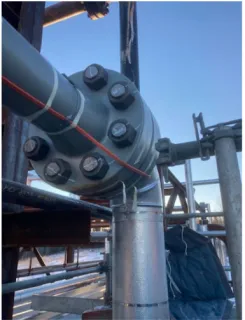
Flanged connections are commonly used in industrial applications as interface between different sections of piping systems, allowing for safe and reliable transport of fluids. A flanged connection basically consists of two mating flanges with a gasket in between (for sealing), held together by fasteners (nuts and bolts, or studs).

What Happened:

A failed gasket recovered from a gasket blowout in a flanged connection that led to a spill of approximately 4 m3 of sour produced water from the high-pressure produced water system. The failure was attributed to deviations from original specifications and improper installation practices.

While there were no associated injuries, the potential existed for a more serious outcome, including fatality.
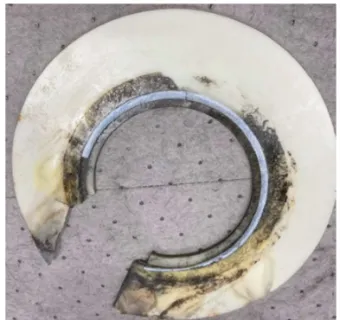
Failed gasket
Actions:

Here are some tips for ensuring the integrity of flanged connections:

  1. Use flanges and gaskets suitable for the intended application. Do not reuse gaskets.
  2. Inspect flanges and gaskets for signs of damage, such as cracks, corrosion, or deformities, before installation.
  3. Ensure gaskets are compatible with the process fluid and conditions (e.g., temperature and pressure).
  4. Properly align flanges and use appropriate torque and tightening sequence during installation, as over-tightening can cause gasket deformation or flange distortion.
  5. Routinely inspect for potential issues, such as leaks, corrosion, or loose bolts.
General Learning:

With the turnaround season upon us, there are a lot of activities involving flange joints, increasing the chances of error. Take the time to do it right. Walk the lines on startup and perform leak tests. Remember, the integrity of flanged connections is critical to the safety and reliability of our operations.

Now What?

To ensure a flanged joint, how should a bolt engage the nut?

During the installation of a bolted flange joint, what are the potential consequences of over-torquing?

What component of a flanged connection n provides the seal, thereby preventing leakage?

Learning Before Serious Harm

Our 2019–2024 PSI Report analyzes industry-submitted incidents to highlight patterns and risks with the highest potential for serious outcomes—supporting learning before harm occurs.

Learn from Past Events

Explore Safety Alerts to see how incidents occurred and what can be done differently. Applying lessons from past events helps workers and leaders recognize hazards before they lead to serious harm.

Related Learning Opportunities

Share: