

Skip to main content
Asbestos Found in Gaskets

Incident Description:

Asbestos is a natural occurring mineral found in rock formations. Due to its durability, strength and fire-resistance qualities, it was widely used in industrial applications, including roof and floor tiles, insulation, and gaskets.
Asbestos can be difficult to identify because it is often mixed with other materials. As a result, the only definitive way to confirm its presence is though testing by an accredited lab. Within our company, asbestos remains present within some older facilities. While efforts are underway to remove this hazard, unidentified materials may still exist in older buildings and process unit gaskets.
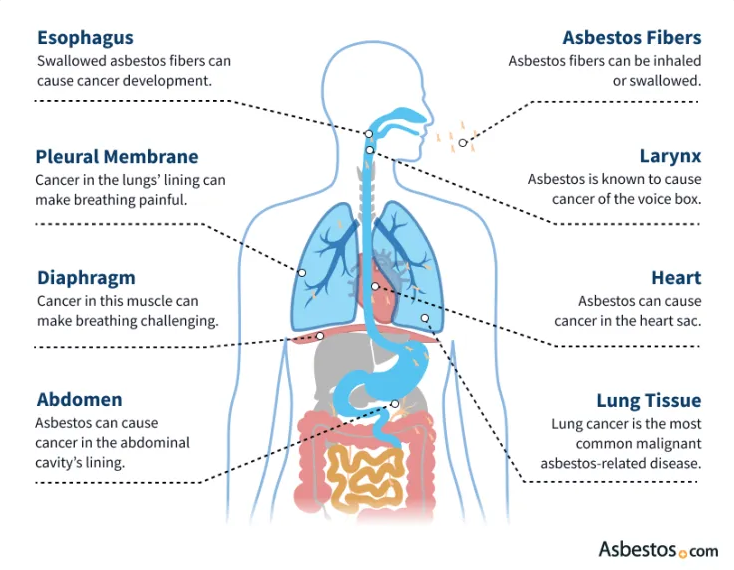
Asbestos fibres are often enclosed within materials, resulting in minimal health risk when undisturbed. However, exposure becomes hazardous when fibres are disturbed, released into the air, and inhaled. Once inhaled or swallowed, microscopic fibres can become trapped in the respiratory or digestive tract. Over time, fibre accumulation can cause inflammation and DNA damage, potentially leading to cancer and other pulmonary diseases. These health effects may take 10 to 70 years to develop.

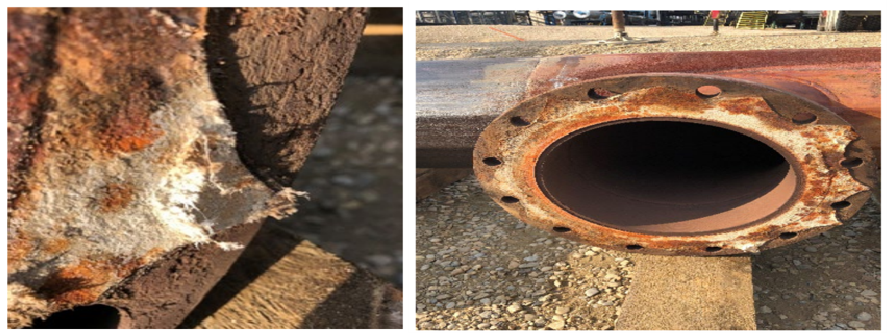
Three workers were removing the exhaust stack from a compressor at a gas plant. They were using a disc grinder to cut the bolts between the faces of a flange connection. During the cutting process, the worker inadvertently cut into the full-face gasket between the flange faces. This action disturbed previously unidentified asbestos-containing gasket material, causing fibres to become airborne.

After removing the exhaust stack, the workers further inspected the flange face gasket and questioned if it contained asbestos. All work was stopped, and appropriate precautions were taken to ensure proper decontamination processes were followed. The affected workers were sent to a clinic for baseline medical assessment.

Asbestos Found in Gaskets
Contributing Factors:
  • Facility personnel were not aware of the potential for asbestos. Previous facility asbestos surveys did not identify the gasket material, as it could not assessed at that time. As a result, it was assumed that the facility did not contain any asbestos.
  • There was a communication breakdown between facility personnel and the contractor. The Safe Work Permit and Field Level Hazard Assessment (FLHA) did not capture the intended use of the grinder; therefore, all hazards and controls were not identified.
Required Actions:
  • Leaders: Review the Safety Awareness Bulletin with company personnel and contract workers to reinforce awareness of potential asbestos hazards associated with gaskets and gasket compounds.
  • Organization: Health & Safety Field Advisors will review and update site orientations to ensure they clearly communicate the potential presence of asbestos in unidentified sources (e.g., gaskets, insulation, flooring, glue, tiles) that may not have been identified in a site survey. Site orientations must not state that a facility is asbestos-free, as there is a potential for asbestos material to be introduced to the site or not identified in a survey.

Learning Before Serious Harm

Our 2019–2024 PSI Report analyzes industry-submitted incidents to highlight patterns and risks with the highest potential for serious outcomes—supporting learning before harm occurs.

Learn from Past Events

Explore Safety Alerts to see how incidents occurred and what can be done differently. Applying lessons from past events helps workers and leaders recognize hazards before they lead to serious harm.

Related Learning Opportunities

Share: