

Skip to main content
Low Point Drain

Overview:

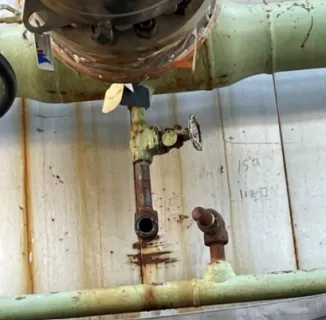
Operations was in the process of depressuring a cooler that had a suspected leak. The operator was using a steam hose to thaw some ice that had accumulated in an elbow. This steam also cleared a blockage in the upstream isolation valve, allowing for an uncontrolled release of H2S. One operator was in the immediate area and was able to egress safely.

Prior to the event, operations had tightened the drain valve, which appeared closed, followed by the removal of the drain plug off the elbow. The lower elbow had visual ice accumulation. In order to depressurize the cooler, operations required a length of hose to tie the line into flare. Due to the ice in the elbow, the decision was made to steam the elbow to clear the ice. When the operator added steam to the elbow, the line heated up, inevitably allowing for the blockage in the valve to free. The valve then allowed sour product at up to 6,200 kPa of 1.5% H2S to be released to atmosphere.

Contributing Factors:
  • Location is a low-point dead-leg without any mitigation (heat trace or insulation).
  • Hazard of ice blocking the valve was not identified. No formal risk assessment was completed for the task.
  • Sour piping system was not tied into flare to allow depressurization and purging into a closed system.
Required Actions:
  • Operations must complete risk assessments for all tasks not covered by practices or procedures.
  • All sites should review and evaluate low points for potential freeze concerns.
  • Follow Breaking Integrity requirements outlined in H2S Code of Practice (Use of Respiratory Protective Equipment).

Learning Before Serious Harm

Our 2019–2024 PSI Report analyzes industry-submitted incidents to highlight patterns and risks with the highest potential for serious outcomes—supporting learning before harm occurs.

Learn from Past Events

Explore Safety Alerts to see how incidents occurred and what can be done differently. Applying lessons from past events helps workers and leaders recognize hazards before they lead to serious harm.

Related Learning Opportunities

Share: