Skip to main content
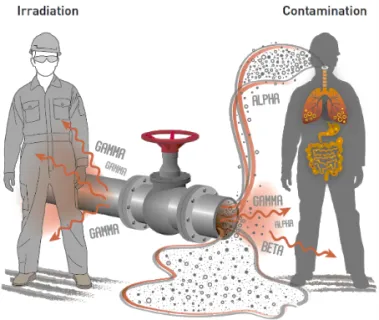
Diagram of how radiation can lead to contamination

What is NORM?

NORM stands for Naturally Occurring Radioactive Material. Small amounts of radioactive elements—like uranium, thorium, and potassium—are found in many natural materials across Canada. These elements slowly break down and release radiation.

Most of the time, these levels are very low and are not harmful. But some activities can cause these materials to build up in higher amounts. When this happens, the material must be handled safely because it can give off more radiation than normal.

Why is NORM a hazard?

Radiation from NORM can increase the risk of certain cancers if people are exposed for long periods of time. Most workplaces do not reach elevated levels, but employers must still work to keep exposure as low as reasonably achievable and follow safety rules.

The more NORM that builds up, the greater the hazard. To stay safe, workplaces must:

  • Monitor where NORM is found
  • Develop safe work practices (e.g., isolation, signage)
  • Use NORM-specific personal protective equipment (PPE) when needed

There are many types of radiation but there are three types of radiation associated with NORM: alpha, beta, and gamma. They affect the body in different ways:

  • Alpha and beta radiation are mainly a risk if the material is breathed in or swallowed. This can happen during maintenance work where dust or sludge is handled.
  • Gamma radiation is highly penetrating, and materials do not have to be inhaled or ingested to be a concern. The greater the intensity, the greater the hazard. This can be a risk even during normal operations, especially if large amounts of NORM have built up.

Safe work practices must protect against both internal and external exposure.

Health Canada and the Federal Provincial Territorial Radiation Protection Committee have created guidelines to help industries manage NORM safely. These guidelines explain how to find, measure, and handle NORM.

Health Canada has recognized six industries where NORM may be present in amounts sufficient to warrant radiation protection practices:

  • Mining and ore processing
  • Energy (oil, natural gas, etc.)
  • Metal recycling
  • Forest and power production
  • Water treatment
  • Tunnelling and underground work

Site characterization

Workplaces that may have NORM must check for it.

This includes equipment or materials that may have become contaminated and have been moved to other locations.

When equipment or waste is prepared for transport, a lab test is recommended when gamma is above background levels or when surface contamination is above 1 Bq/cm2. The results from past tests help set the site’s “history,” which can be used to guide future shipments.

Training
  • Workers who may be exposed to NORM must receive training.
  • Personnel conducting surveys or collecting samples need to be trained in detection equipment and sample collection.
  • TDG training is also required for shipping radioactive materials.
Detection and Control

A NORM safe work practice can help:

  • Keep track of where NORM is located and develop a site “history”
  • Reduce workplace exposure
  • Protect the public and the environment

Share: